


One procedure, all the questions
The decision to undergo rhinoplasty is not made in a day. People spend months reading: who should perform it, how long recovery takes, what revision surgery means and whether nasal obstruction and cosmetic concerns can be addressed in the same operation.
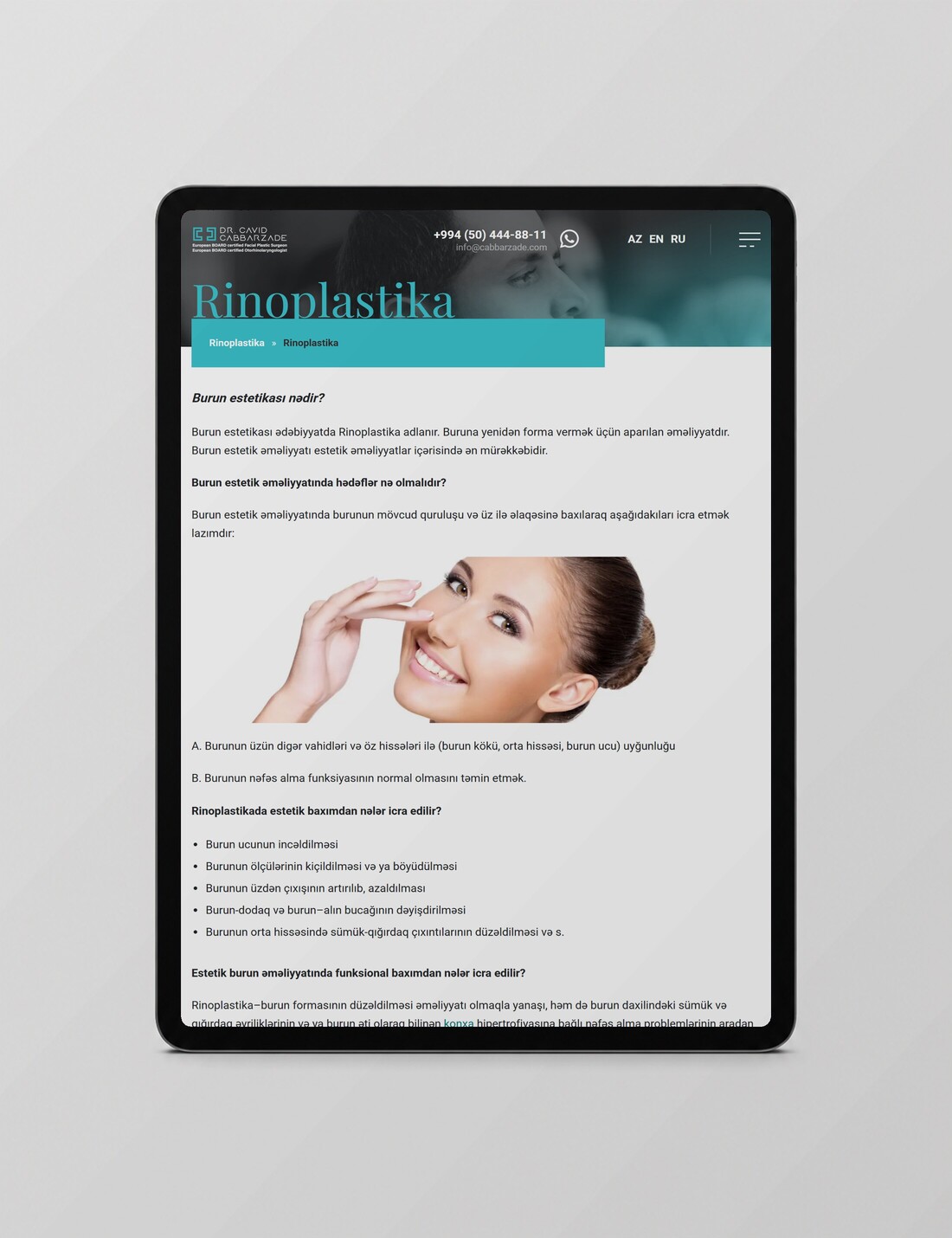
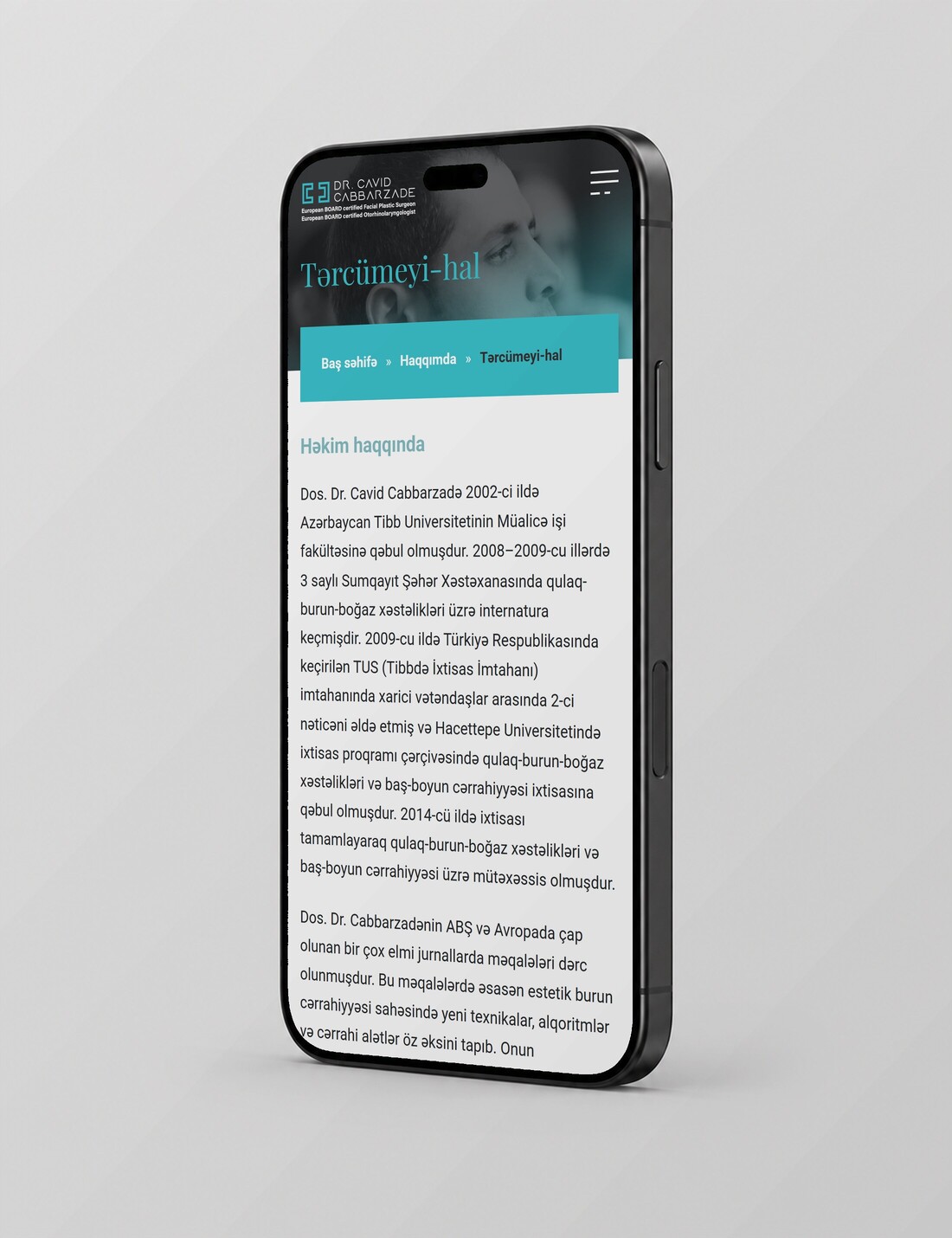
The website was also built around this reading process. Instead of a single presentation page, the questions were divided into separate pages — covering both cosmetic and functional aspects: deviated septum, turbinate hypertrophy and revision rhinoplasty.
What we did
Questions were split across pages
Rhinoplasty, revision rhinoplasty, deviated septum and turbinate hypertrophy — each has its own page.
The blog is part of the reading path
The blog is not decoration: articles such as "after rhinoplasty" and "misconceptions about rhinoplasty" answer the next question a person making a decision may have.
A separate section for online consultations
There is a separate entry point for people getting in touch remotely.
Separate section for scientific activity
Articles, presentations and talks, and international activities — these are in a separate section and are not mixed with the treatment pages.
Three languages
Azerbaijani, English and Russian.
Measured result
Technology and numbers
Frequently asked questions
Why can a rhinoplasty site not be a single presentation page?
The decision is not made in a day — people read for months: who should do it, how long recovery takes, what a revision operation means. The site was built to match that reading process, with the questions split into separate pages.
Are functional problems covered too?
Yes. A deviated septum, turbinate hypertrophy and nasal obstruction sit alongside the aesthetic section so that the functional and the aesthetic subjects can each be found on their own.
What job does the blog do?
It is part of the reading path. The pages close the main questions of the decision and the blog the smaller ones — the two link to each other so nobody is left halfway.
similar?