

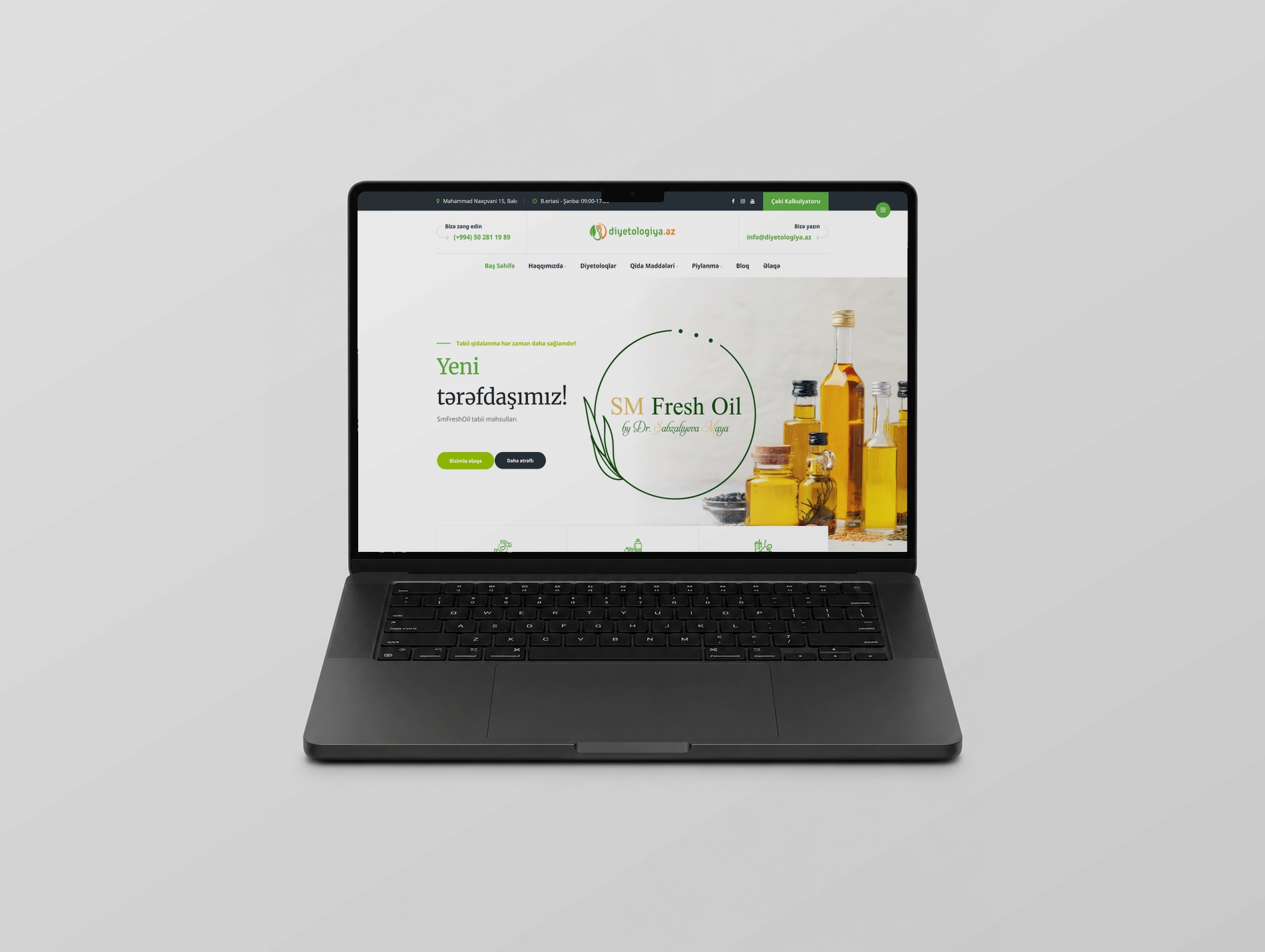
A nutrition portal people read
Diyetologiya.az is not a doctor's page — it is a content portal. It explains the fundamentals of nutrition: proteins, fats, carbohydrates, fibre, fluids, vitamins and minerals.
The main risk with this volume of content is that people do not know where to begin. That is why the sections were organised into a topic tree, with a separate introductory page for each branch.
What we did
Topic tree
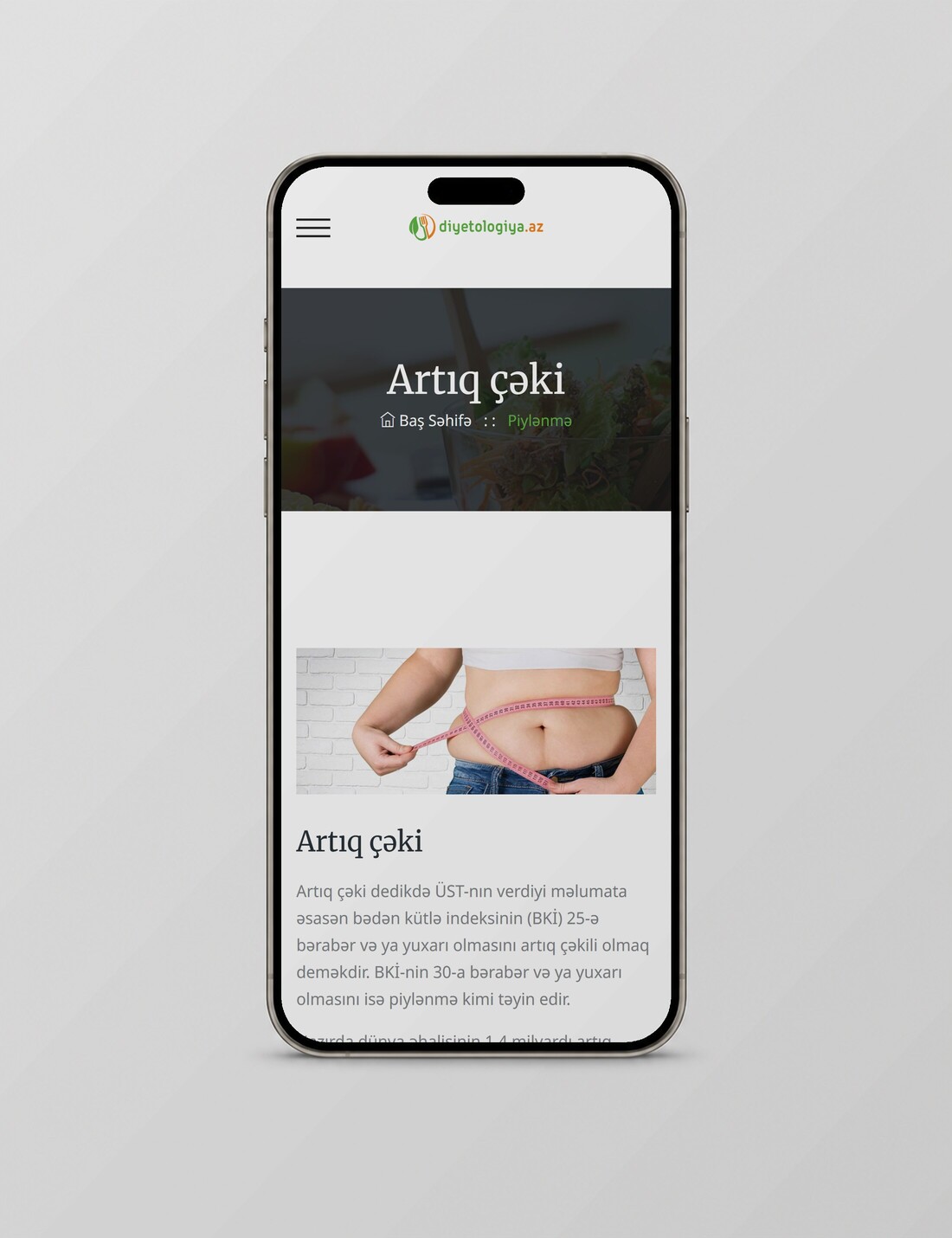
Nutrients, obesity and diets are three separate branches. Each branch contains separate pages — covering everything from protein to energy balance.
Weight calculator
A calculation tool for readers: they can check their own metric without reading the text.
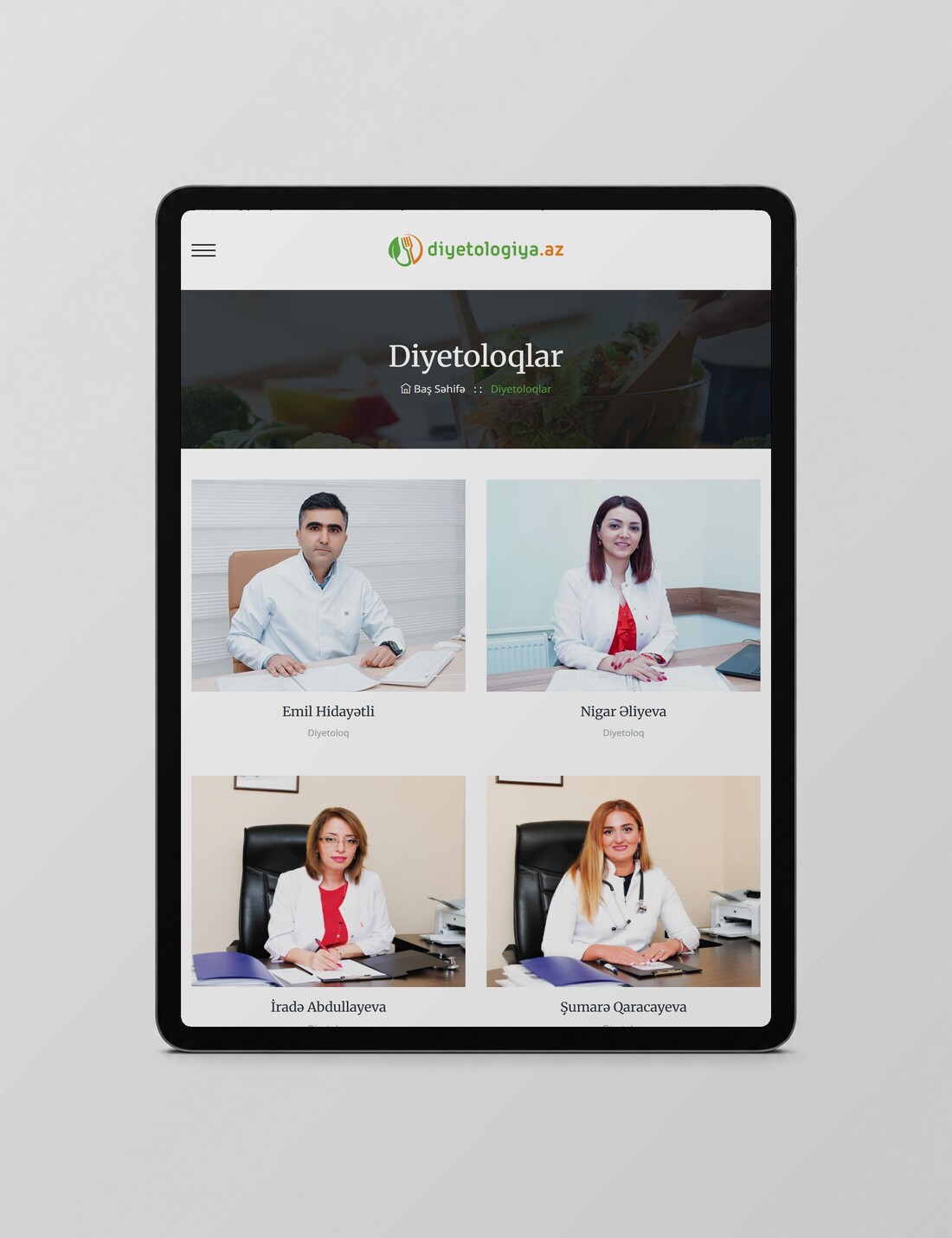
Dietitians section
The experts behind the portal are featured on a separate page.
Blog
New articles are added without changing the main explanatory sections.
Working hours and address
Consultation hours and the address remain fixed in the header bar.
Social media
On Instagram, the portal's topic structure is adapted to a shorter format: one post — one nutrient or one habit.
Someone who sees the short explanation in the post can find the full text on the website.
Technology and numbers
Frequently asked questions
What is the difference between a content portal and a doctor's site?
On a portal the volume of text is the main risk — people do not know where to start. So the sections are arranged as a topic tree and each branch has its own entry page: proteins, fats, carbohydrates, fibre, vitamins and minerals.
What is the weight calculator for?
It is the point where a reader moves from text to action. The result is not a diagnosis, only the start of a conversation — the dietitians section follows it.
How does the blog connect to the structure?
Blog posts link into the branches of the topic tree. Someone arriving from search lands on an article and moves from there to the main section of that topic.
similar?