


A parent's question, a doctor's answer
Paediatric neurology is a field that can sound frightening to parents: hypoxia, complications from measles, and a baby's head posture. There is a great deal of information online about these topics, but most of it is either overly medical or built around fear.
The account is structured to do the opposite: the heading uses the parent's own words, while the answer comes from the doctor. The aim is not to diagnose — it is to clarify when to see a doctor.
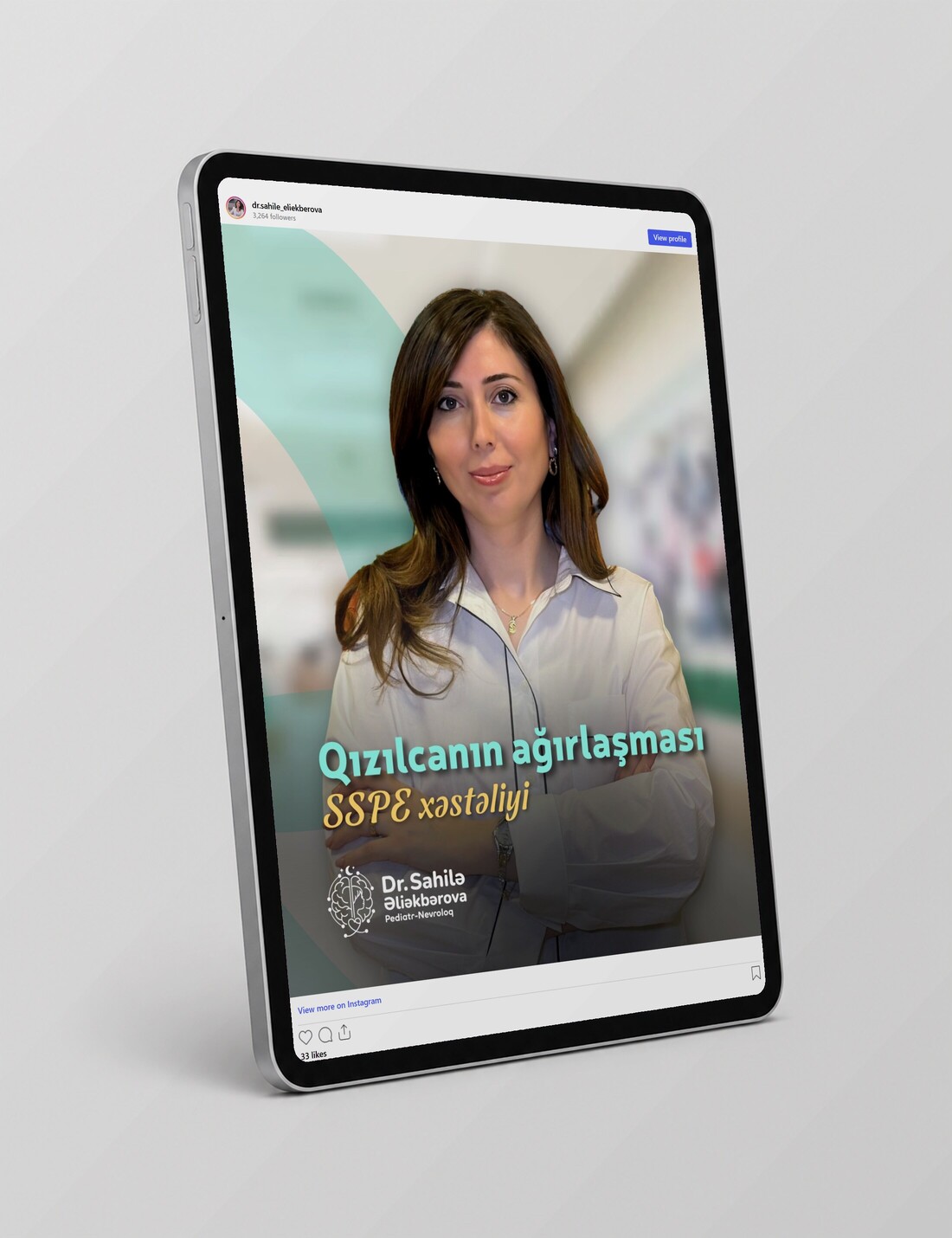
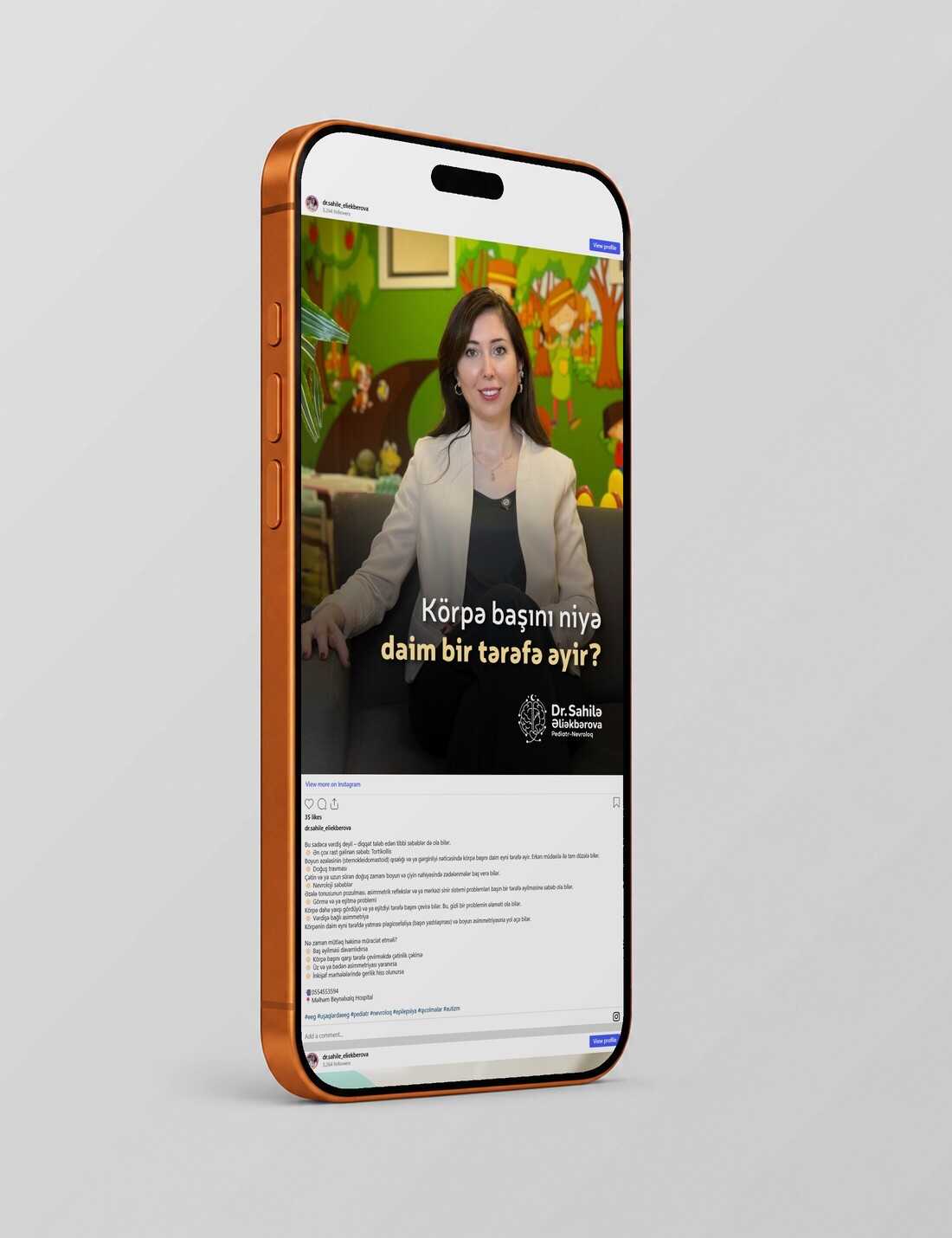
What we did
The heading is the parent's question
Each post presents an everyday observation: "Why does a baby constantly tilt their head to one side?", "How oxygen deprivation (hypoxia) harms children's brains", "A complication of measles — SSPE". People recognise their own situation in the list.
Unified template
The same typography, the same signature block, the same colour group. The subject changes, but the appearance does not — the account looks consistent across the grid.
The doctor's own footage
The photos are taken in the clinic's real environment. Stock photos are not used, because the doctor is the person parents recognise.
Monthly plan
The topics are agreed upon in advance and published in sequence.
Technology and numbers
Frequently asked questions
How is the tone set for a subject like paediatric neurology?
Not on fear. Hypoxia, measles complications, an infant’s head posture are already worrying subjects for a parent. The purpose of a post is not to diagnose but to make clear when to see a doctor.
Why are headlines written in the parent's own words?
A headline like «Why does the baby always tilt their head to one side?» is the parent’s own observation — they recognise themselves in it. The same topic written in medical terms is scrolled past.
Why does the doctor appear in the photographs?
Because that is the face a parent recognises. A post that looks like an anonymous information board reads differently even with identical text.
similar?