

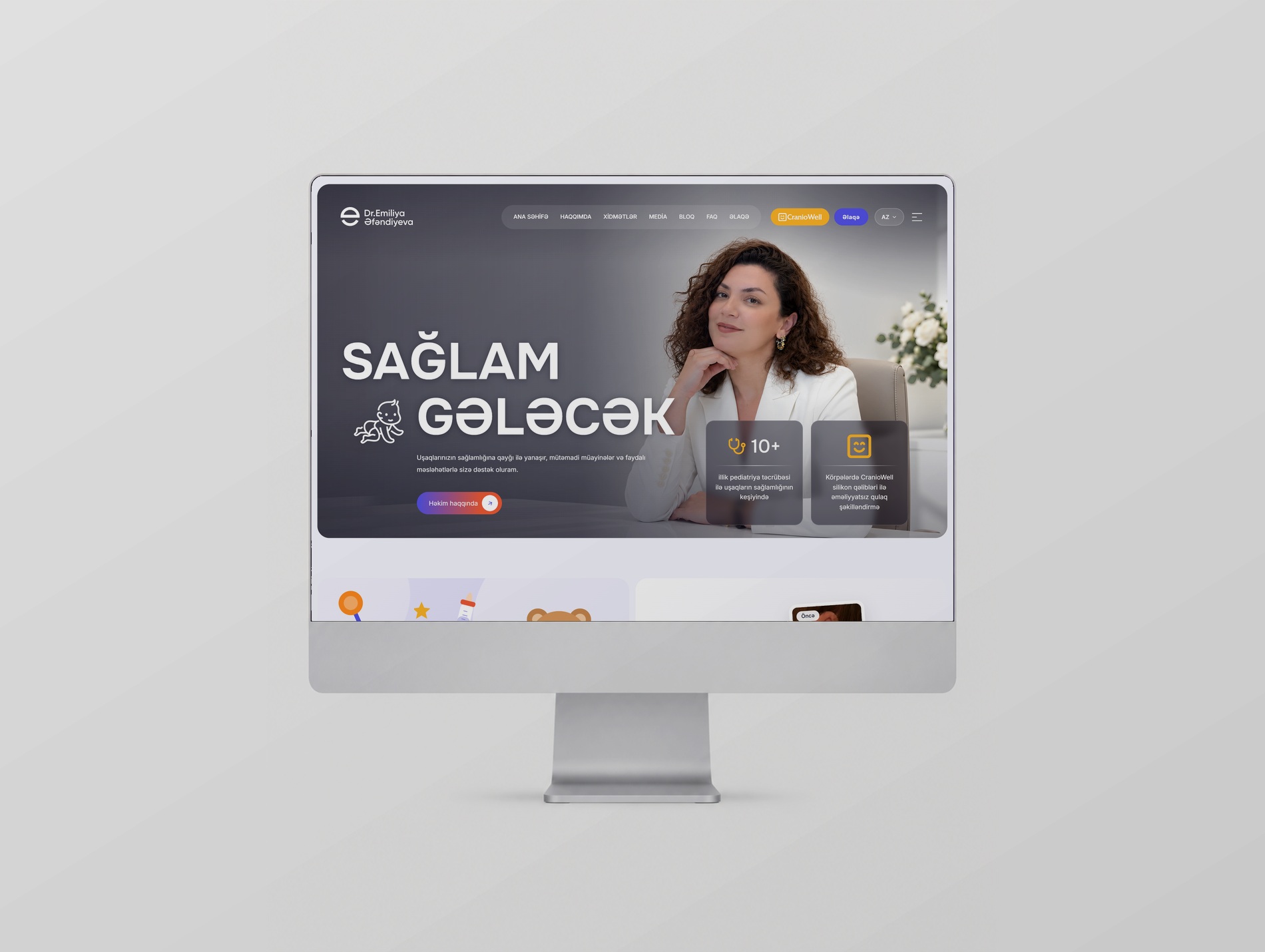
A narrow time window
Dr. Emiliya Efendiyeva is a paediatrician at Malham International Hospital. Alongside the regular paediatric practice she has a separate line of work: correcting ear deformities in babies without surgery, with CranioWell silicone moulds.
That line has a difficulty of its own — time. The method works in the baby’s first weeks, and in those very days the parent is not searching for anything; the people around say it will sort itself out. So the site had to answer one question early rather than late: what this is, until when it can be started, and what the result looks like.
The paediatric practice is a separate branch and must not blur into it.
What we did
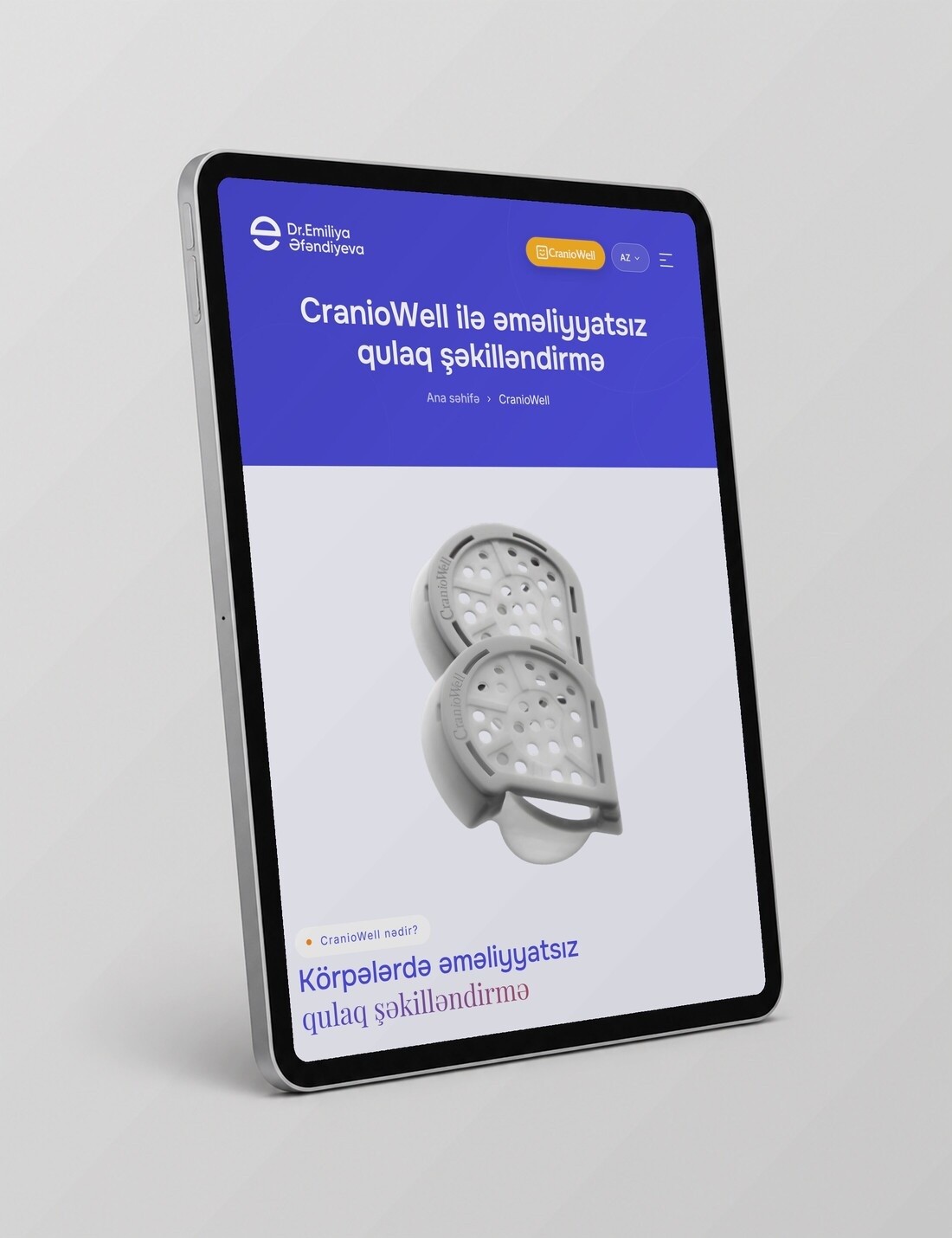
CranioWell is its own section
The method, who it suits, how the process runs and how long it takes are kept together — they do not dissolve into the list of paediatric services.
Before-and-after gallery
The result is shown in photographs: 20 pairs. The captions are neutral; no pair promises a duration or an outcome.
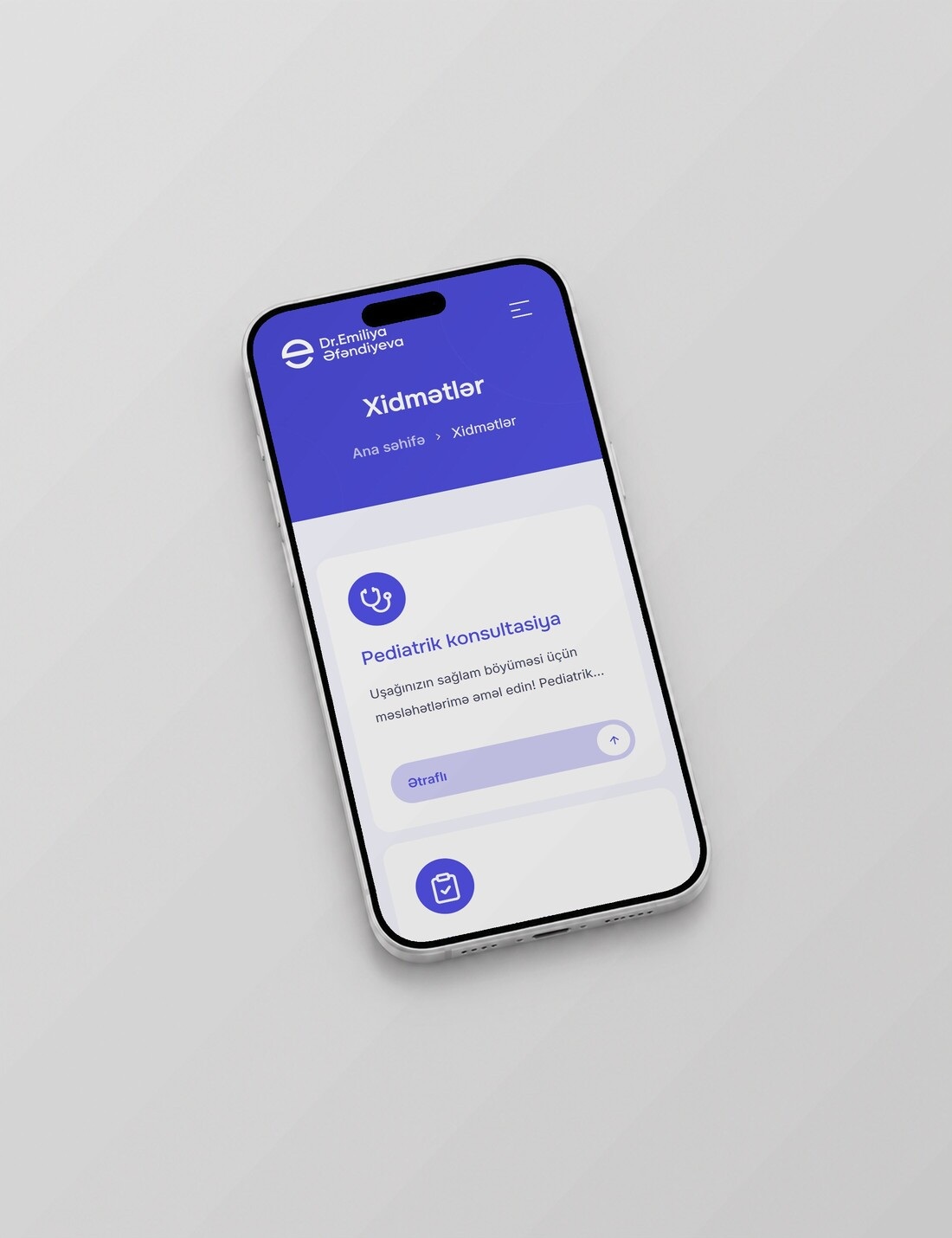
Services split by question
Paediatric consultation, routine check-ups, vaccination, newborn examination, feeding advice — each has its own page.
Text comes with its source
Medical content carries an external reference, and the page shows a visible author and a “last medically reviewed” date.
Three languages
Azerbaijani, English and Russian. Azerbaijani stays without a prefix in the URL; the other two sit under /en and /ru.
The panel belongs to the doctor
Blog, FAQ, videos, before-and-after pairs and service texts are edited in the admin panel — no request to us is needed for a change.
Social media
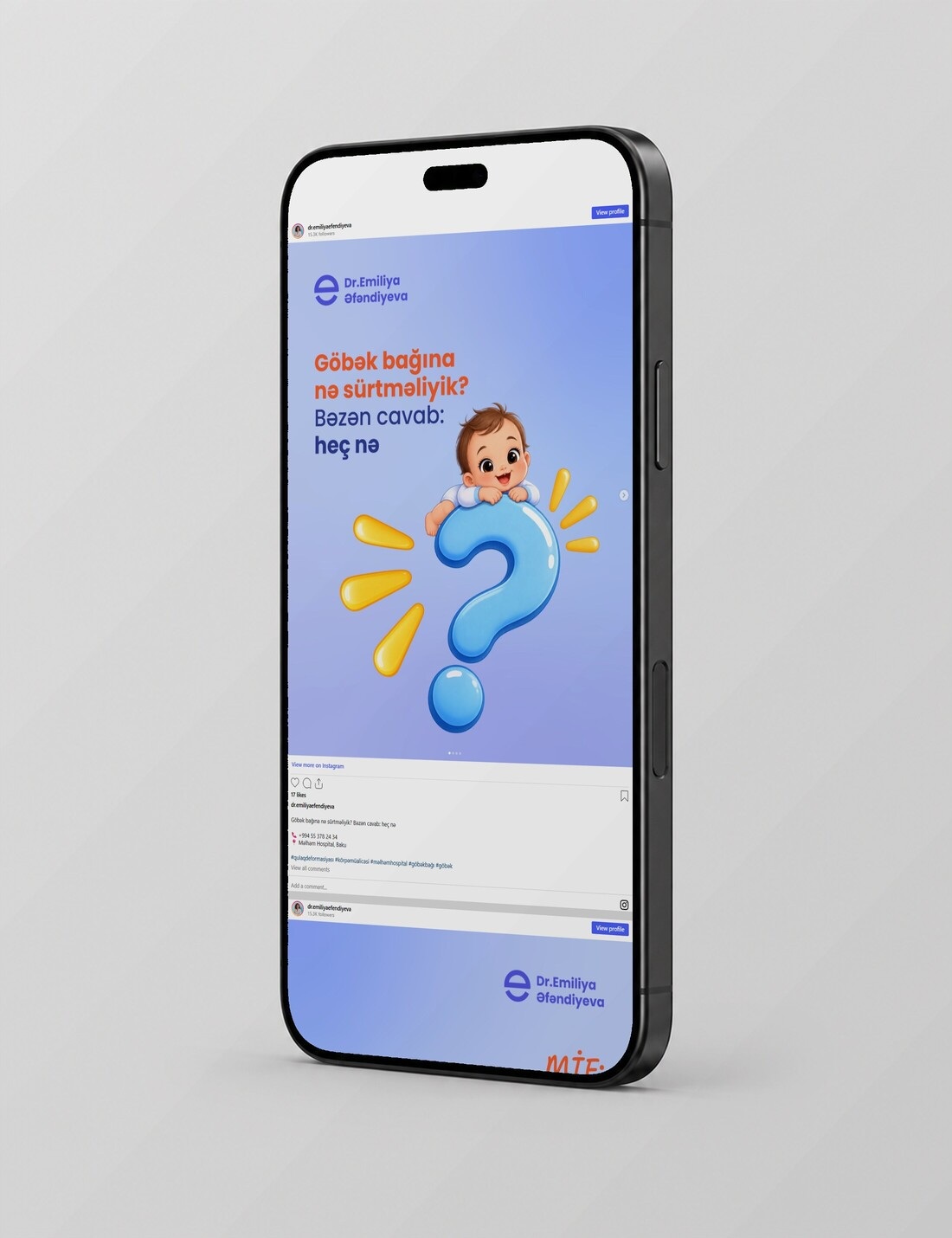
The monthly topic plan is aligned with the service and question sections of the site: a question raised in a post leads to the page that answers it in full.
The account’s highlights keep advice, ear restoration, feedback, events and FAQ as separate branches — the archive does not get lost in the feed.
Technology and numbers
Frequently asked questions
Why is ear moulding a separate section?
Because the reader is a different person. Paediatric pages are opened by a parent whose child is unwell; the CranioWell page is opened by a parent worried about the shape of a baby’s ear. In the second case both the question and its timing differ — the method is applied in the baby’s first weeks.
What was watched in the before-and-after photographs?
The captions. The photograph shows the result; the text promises nothing — no duration, no percentage, no guarantee. Unverified claims are not published in medical content.
Who updates the site?
The doctor herself. Blog, questions, videos, service texts and before-and-after pairs sit in the admin panel; the editor is deliberately plain, because the panel is for medical content, not for design.
How are the site and social media connected?
The topic plan follows the sections of the site. A post raises the question and the full answer lives on the site — so the content written each month accumulates on the site instead of staying in the feed.
something similar.