


First the condition, then the doctor
Cardiovascular surgery is a field in which patients often begin with a search. Varicose veins, vascular blockage, diabetic foot, lymphostasis — people enter the symptom first and the doctor's name later.
That is why the website was built around explanations of conditions rather than the doctor's biography. The biography is still there; it is simply not the first thing visitors see.
What we did
Conditions at the centre
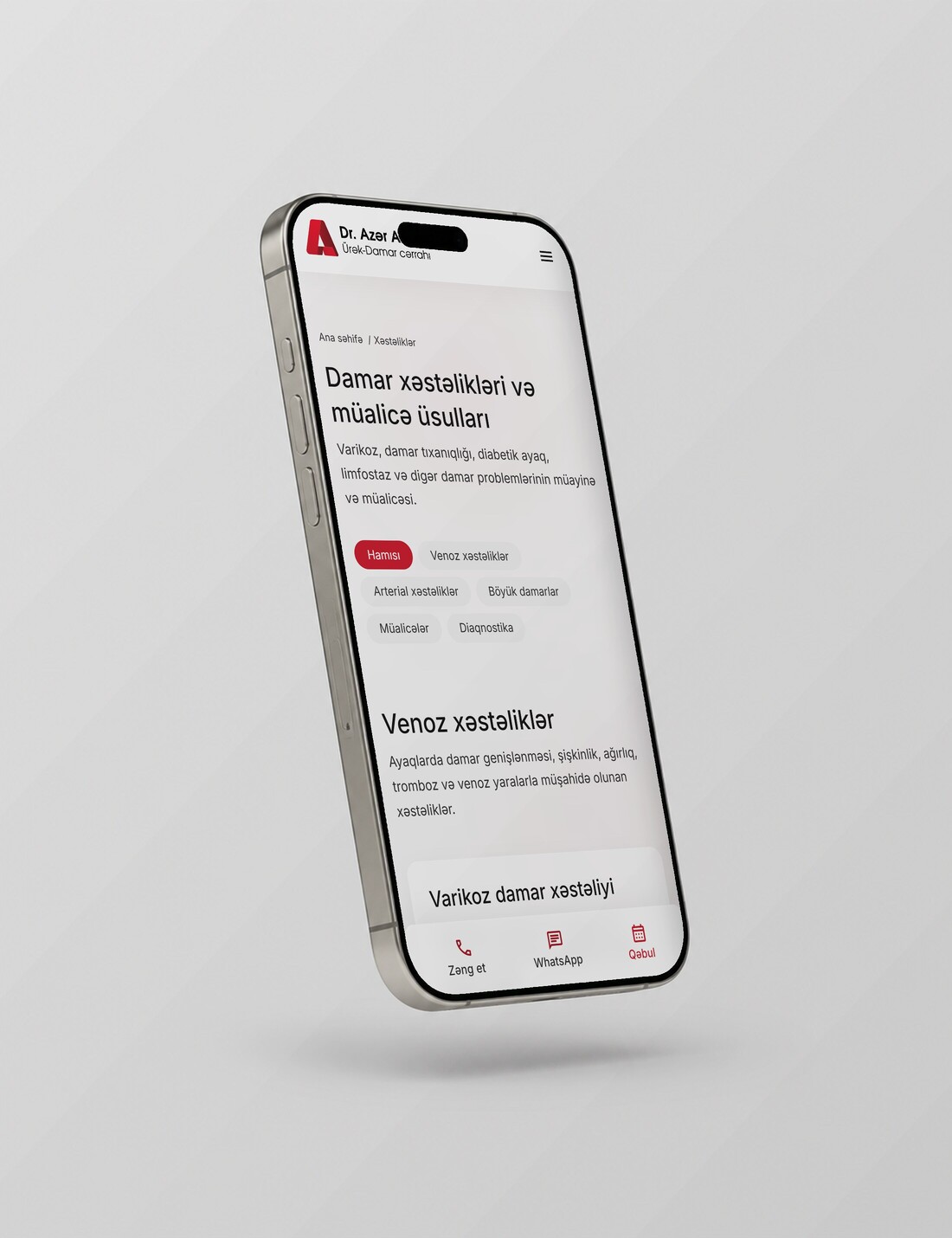
The section was divided into categories: venous diseases, arterial diseases, major blood vessels, treatments, and diagnostics. Filters are used to make a selection, and the list changes without reloading the page.
Treatment methods next to the condition
Each condition card displays the relevant methods as labels — endovenous laser ablation, radiofrequency ablation, sclerotherapy and compression therapy. Patients can see what to expect without opening the card.
"Before and After" with consent
The photos are posted with patient consent, and a clear notice at the beginning of the section states that the materials are for information only.
Media archive
TV programme and interview articles are collected in one section.
Mobile enquiry bar
Fixed bar at the bottom of the screen: call, WhatsApp, book an appointment.
Three languages
Azerbaijani, English and Russian.
Social media
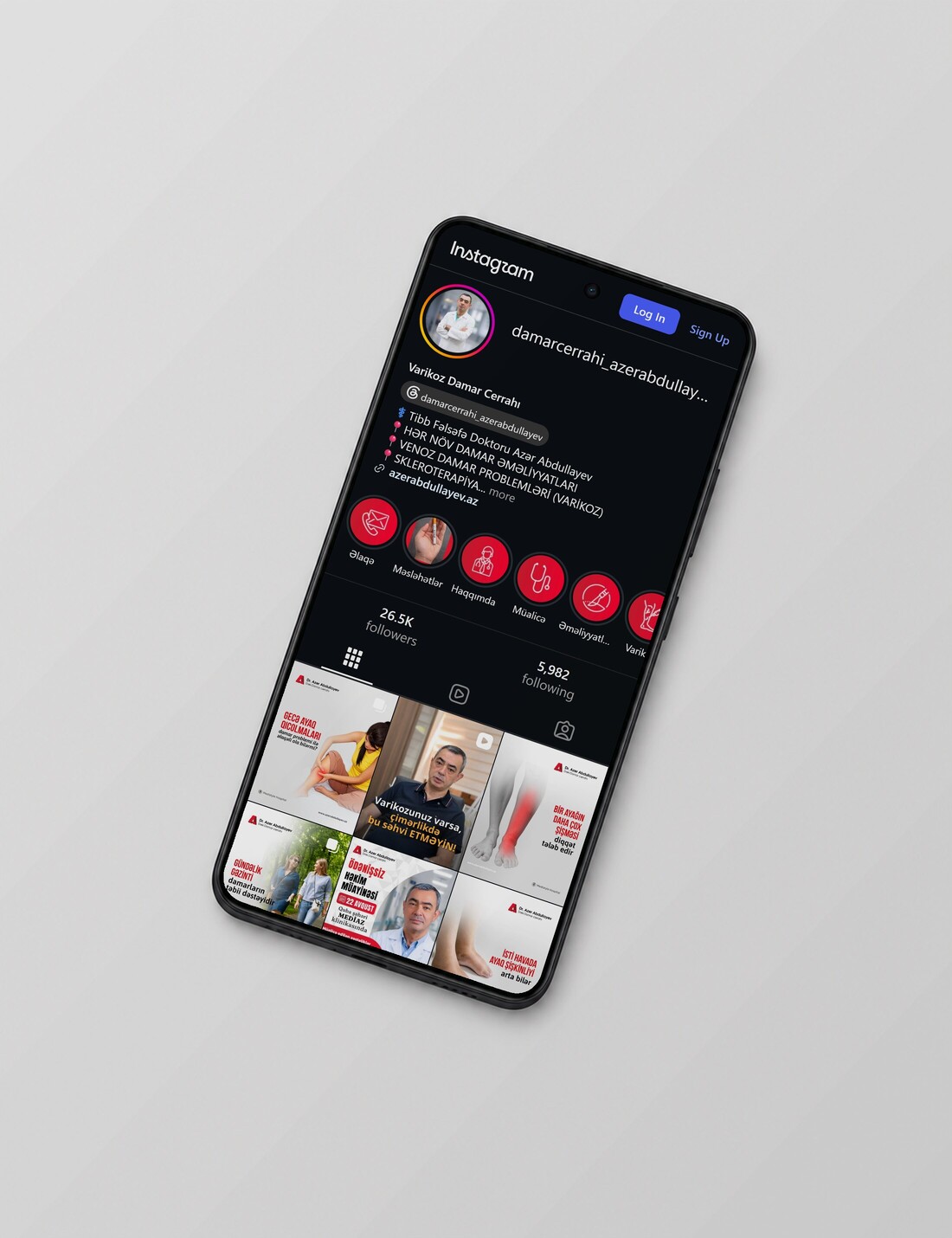
The Instagram account is managed alongside the website. The monthly content plan is agreed before publication, and the topics are prepared using the same language as the condition sections on the website.
The aim is not to keep the account as a separate channel: someone who sees the short answer in a post can find the detailed explanation on the website.
Technology and numbers
Frequently asked questions
Why doesn't the site open with the surgeon's biography?
In cardiovascular surgery people search by symptom: varicose veins, arterial blockage, diabetic foot, lymphoedema. So the first screen carries the explanation of conditions. The biography is on the site — just not at the start of the reading path.
How are before-and-after images handled?
Only with the patient’s consent. The section opens separately rather than being buried inside a treatment page — people see it when they choose to, not unexpectedly.
How is contact solved on mobile?
A fixed bar sits at the bottom of the screen: call, WhatsApp and enquiry. The contact buttons stay within reach wherever you are on the page.
similar?