

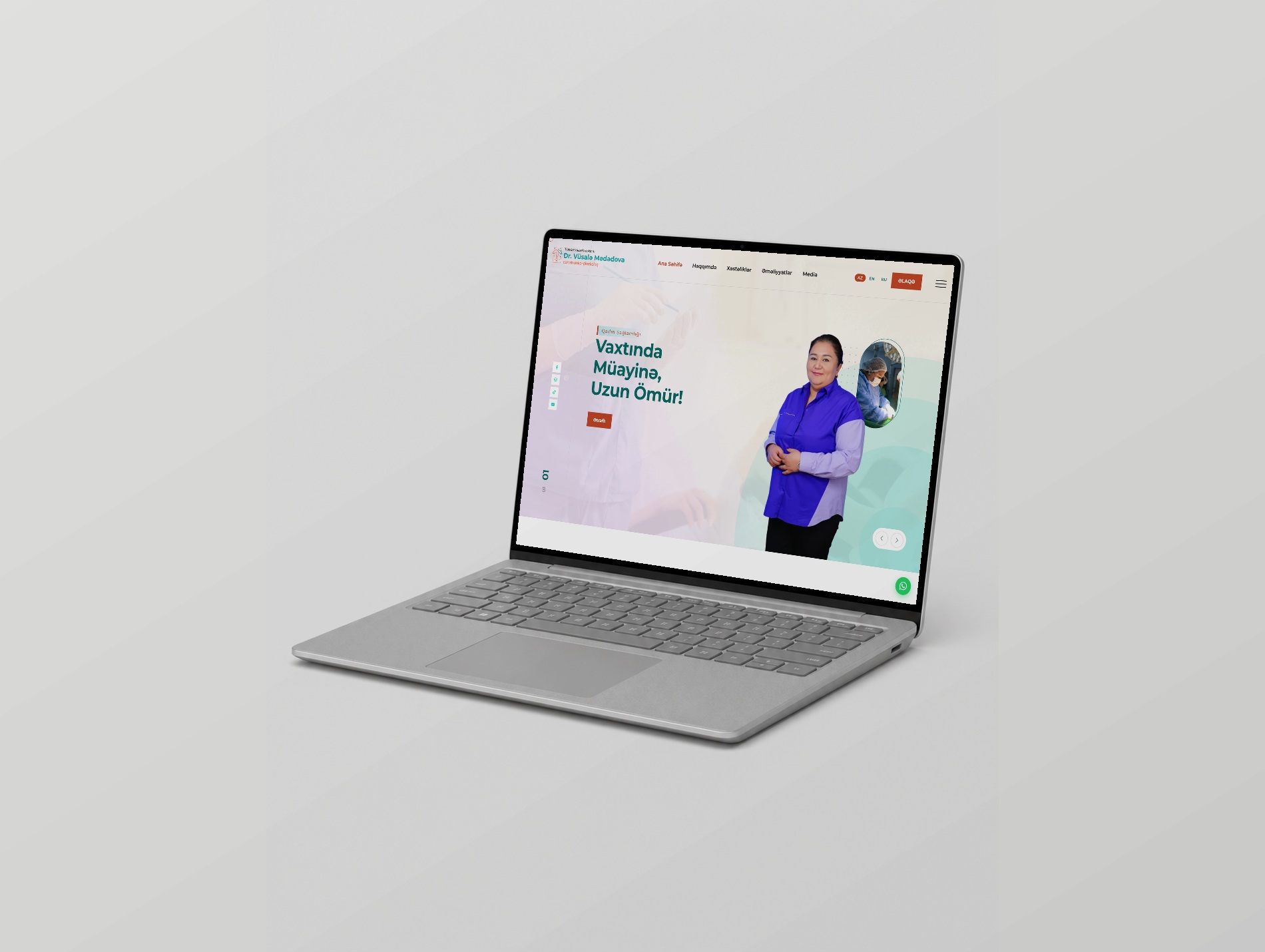
Hearing the answer directly from the doctor
The hardest part of gynaecologic oncology is not the text. A person searches for a symptom, the subject is heavy, and a long written explanation is often left half-read.
That is why video was placed at the centre of the website. Hearing the same answer directly from the doctor on screen works differently from reading it in text.
What we did
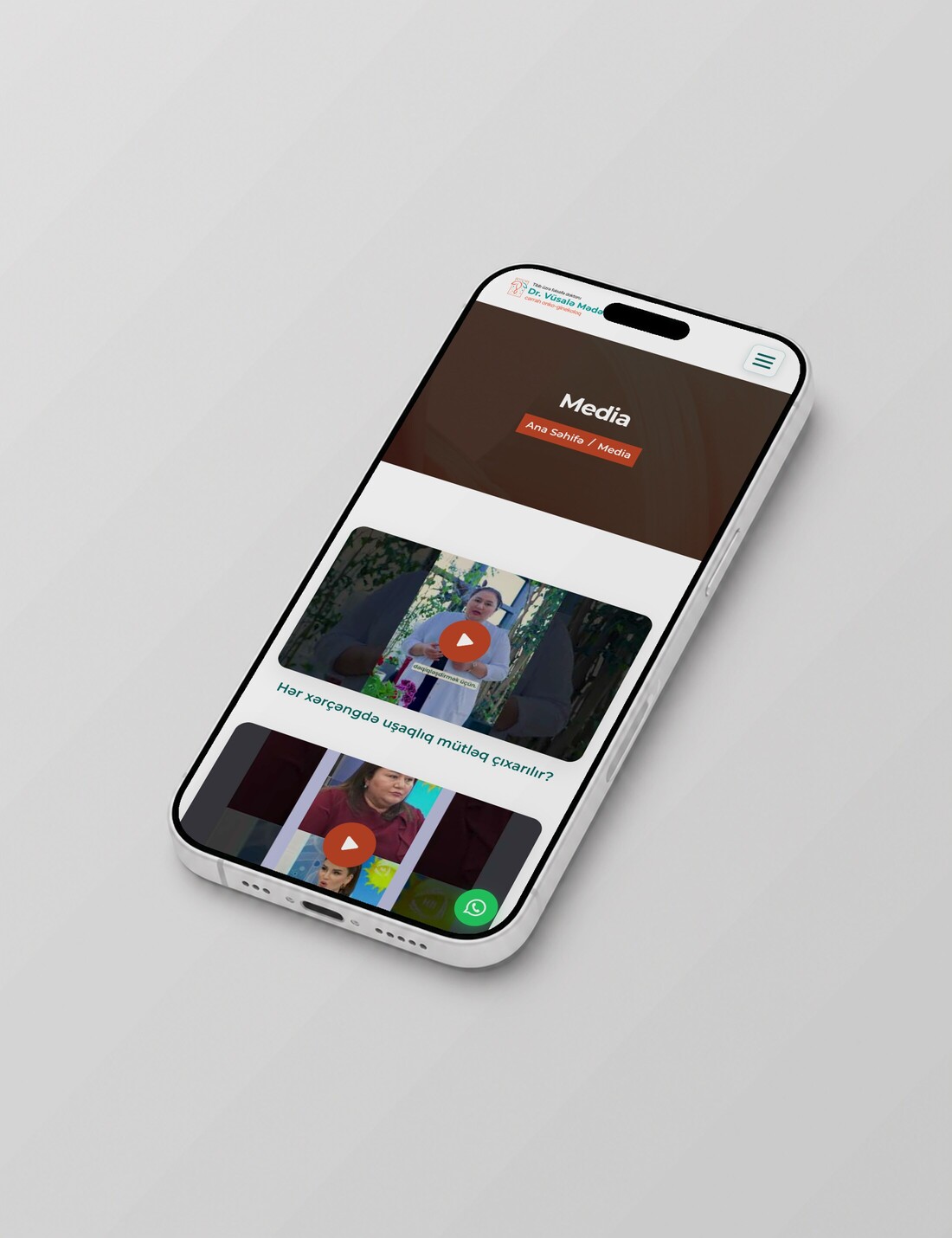
Media section as a video library
Every video answers a real patient question: "Is the uterus always removed for every cancer?", "What does the colour of menstrual blood mean?", "What do HPV and CA-125 indicate?". The questions are written as titles, so people can scan the list and find their own question.
Conditions and procedures
Two separate sections: a patient at the examination stage and a patient preparing for surgery do not have the same needs.
Conferences and certificates
Conferences are listed in a table with columns for year, event name, city, and country; certificates are in a separate gallery.
Biography on a separate page
Education, workplace and academic degree in one place — not scattered across the home page.
Three languages
Azerbaijani, English and Russian.
Social media
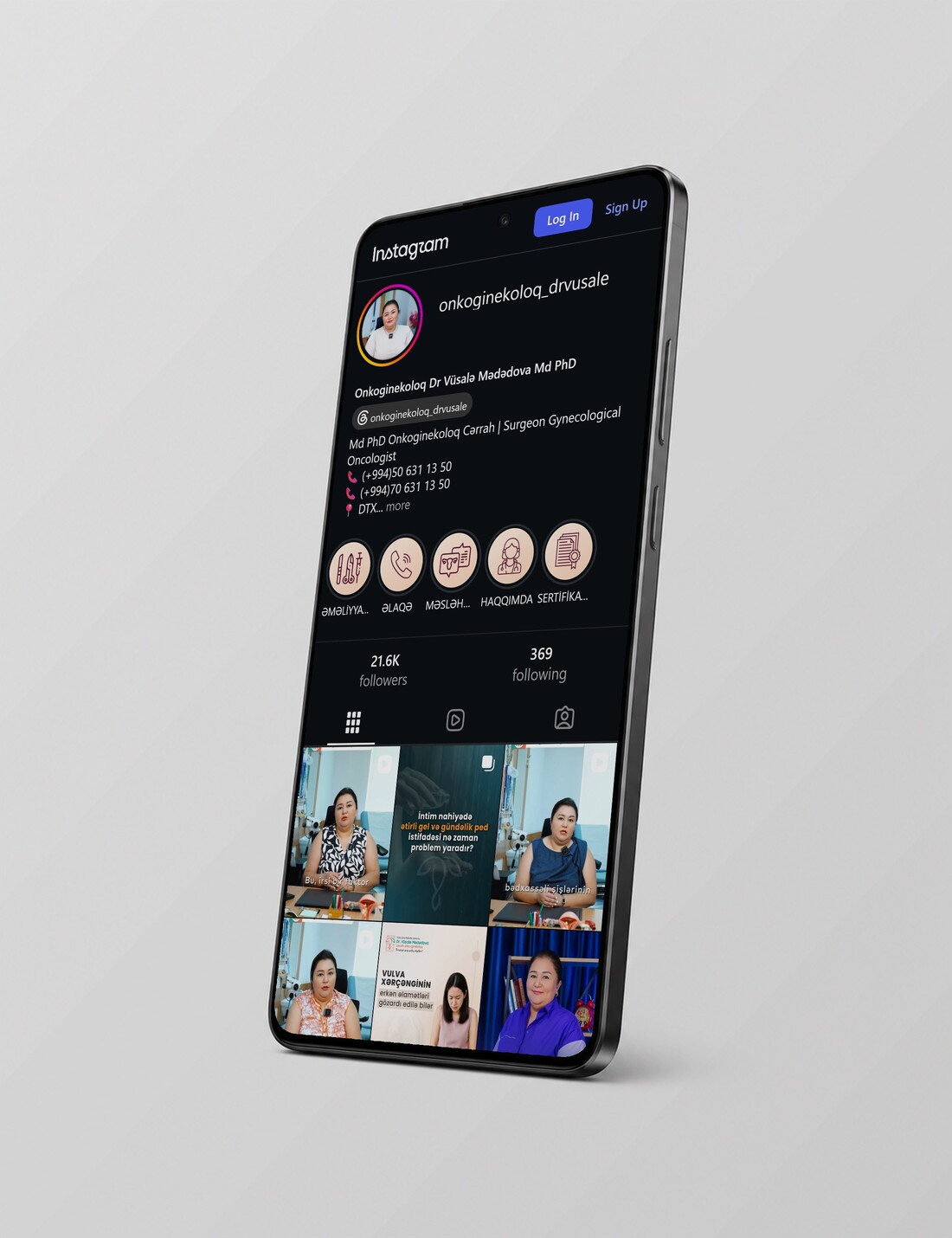
We also manage the Instagram account: the monthly plan is approved before publication, and posts are prepared and published.
Technology and numbers
Frequently asked questions
Why is video at the centre rather than text?
In gynaecological oncology the subject is heavy and a long written explanation is often left half-read. Hearing the same answer from the doctor on screen works differently — so the media section was built as a video library.
How are the videos organised on the site?
Collected by topic in the media section, so a patient finds their own question in the list. Video does not disappear inside a condition page; it has its own entry point.
Is social media part of the same project?
Yes. The video content on the site and the Instagram content come out of one plan — the doctor speaks once and the material is used on both channels.
similar?